
Saturday, February 21, 2009

Young Scientist Challenge


All of us have taken a science class at one time or another. Some recall science with feelings of excitement, wonder and awe. Some continue their studies in science throughout the rest of their education. And some even take their love of all things science and make a career out of it. But for many, science is not a happy subject. Do you think back to studying science and get a feeling of dread, anxiety or fear? When did you lose interest in science -- sometime around middle school? Well, you're not alone.
­Studies have shown that an interest in science is either piqued or lost in middle school. Think back to that time in your life. It probably wasn't the best time, was it? That time is full of awkwardness, pain and peer pressure. At that age, children begin to really grow and mature. And in doing that, they begin to find out what they're really interested in. But children are also extremely impressionable, and their friends may not like the interests they're developing. Let's face it -- science and math aren't the most glamorous subjects around, and kids don't want to seem uncool. So they give up science and move on to study other things. But those kids who give up science and math miss so much that it's nearly impossible for them to catch up to their peers. So educators are taking a proactive stance and doing everything they can to keep interests high -- they want science and math to be cool again. Science And Maths Still Rocks...

Friday, February 13, 2009

The Interesting Theraphy

Gene Theraphy


Gene therapy is a rapidly growing field of medicine in which genes are introduced into the body to treat diseases. Genes control heredity and provide the basic biological code for determining a cell's specific functions.

Gene therapy seeks to provide genes that correct or supplant the disease-controlling functions of cells that are not, in essence, doing their job. Somatic gene(body gene) therapy introduces therapeutic genes at the tissue or cellular level to treat a specific individual. Germ-line gene therapy inserts genes into reproductive cells or possibly into embryos to correct genetic defects that could be passed on to future generations. Initially conceived as an approach for treating inherited diseases, like cystic fibrosis and Huntington's disease, the scope of potential gene therapies has grown to include treatments for cancers, arthritis, and infectious diseases. Although gene therapy testing in humans has advanced rapidly, many questions surround its use. For example, some scientists are concerned that the therapeutic genes themselves may cause disease.

Others fear that germ-line gene therapy may be used to control human development in ways not connected with disease, like intelligence or appearance(playing God??).

Tuesday, February 10, 2009

Air Car


Gasoline is already the fuel of the past. It might not seem that way as you fill up on your way to work, but the petroleum used to make it is gradually running out. It also pollutes air that's becoming increasingly unhealthy to breathe, and people no longer want to pay the high prices that oil companies are charging for it. Automobile manufacturers know all of this and have spent lots of time and money to find and develop the fuel of the future.
The search is on baby, but what will this fuel of the future be? Ready-made fuels like petroleum are becoming more difficult to find and automobile manufacturers are turning to greener energy sources like batteries. These batteries can be charged with energy and placed in a car where that energy can be released. As good as that idea might seem, some manufacturers think air could become an even better energy source.


Air? At first glance, the idea of running a car on air seems almost too good to be true. If we can use air as fuel, why think about using anything else? Air is all around us. Air never runs out. Air is nonpolluting. Best of all, air is free.h This is super cool it is not a fantasy. Here's one example :http://dvice.com/archives/2008/02/zero_pollution.php

Tuesday, January 13, 2009

Evolution


The theory of evolution is one of the best-known scientific theories around. Try to make it through a day without using or hearing the word "evolution" and you'll see just how widespread this theory is.
Evolution is fascinating because it attempts to answer one of the most basic human questions: Where did life, and human beings, come from? The theory of evolution proposes that life and humans arose through a natural process. A very large number of people do not believe this, which is something that keeps evolution in the news. There are some controversies in this theory of Evolution, the founder of the this theory (Charles Darwin) took actually 25 years to reveal his findings to the world.He was basically scared that that most of the scientist and clergy during his era could not accept the fact that human did evolve from apes. Among those controversial topics are the idea of how earth and humans itself evolve( and also its surroundings) is contradict with the genesis of the Bible. Therefore, most Christians are a quiet skeptical about this theory.

Friday, January 9, 2009

Schizophrenia


Schizophrenia is a mental disorder. It difficult for a person to tell the difference between real and unreal experiences, to think logically, to have normal emotional responses to others, and to behave normally in social situations.


Psychological and social factors may also play some role in its development. However, the level of social and familial support appears to influence the course of illness and may be protective against relapse.
There are 5 recognized types of schizophrenia: catatonic, paranoid, disorganized, undifferentiated, and residual. Features of schizophrenia include its typical onset before the age of 45, continuous presence of symptoms for 6 months or more, and deterioration from a prior level of social and occupational functioning.

People with schizophrenia may show a variety of symptoms. Usually the illness develops slowly over months or even years. At first, the symptoms may not be noticed. For example, people may feel tense, may have trouble sleeping, or have trouble concentrating. They become isolated and withdrawn, and they do not make or keep friends. As the illness progresses, psychotic symptoms develop:


  • Delusions - false beliefs or thoughts with no basis in reality


  • Hallucinations - hearing, seeing, or feeling things that are not there


  • Disordered thinking - thoughts "jump" between completely unrelated topics (the person may talk nonsense)


  • Catatonic behavior - bizarre motor behavior marked by a decrease in reactivity to the environment, or hyperactivity that is unrelated to stimulus


  • Flat affect - an appearance or mood that shows no emotion


No single characteristic is present in all types of schizophrenia. The risk factors include a family history of schizophrenia. Wow, schizophrenia is thought to affect about 1% of the population worldwide.

Monday, January 5, 2009

Hidden Words Of Bahá’u’lláh

O SON OF SPIRIT! Noble have I created thee, yet thou hast abased thyself. Rise then unto that for which thou wast created.

-Bahá’u’lláh-

Saturday, January 3, 2009

The Human Genome Project

The World Of Genetics


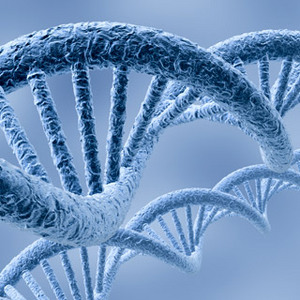
­Space may be the final frontier, but human biology is the original unknown, challenging us to discover who we are and where we came from. DNA, the building block of life, contains the genetic code that informs so much of who we are. This code is written with four letters, each representing a different base. The four bases are adenine (A), which pairs with thymine (T), and cytosine (C), which pairs with guanine (G).


Scientists have long known that these four letters provide the recipes for proteins, which carry out numerous bodily functions. But there are still questions to be answered, including how the 3.2 billion base pairs contained in the human genome are ordered. (The human genome is a person's entire bundle of DNA divided unevenly among 23 pairs of chromosomes.) To that end, the Human Genome Project (HGP) was launched in 1990. Some of the project's ambitious goals included:


  • Sequencing the entire human genome


  • Identifying human genes


  • Charting variations across human genomes


  • Sequencing genomes of the mouse and four other "model organisms"

Future projects and areas of research related to the HGP are seemingly endless. Many millions of dollars are being poured into projects like Encode, a massively ambitious effort to determine the role of every single piece of DNA in the human genome. (Encode stands for Encyclopedia of DNA Elements.) But while information yielded from the HGP and related projects will likely lead to important medical advances and disease treatments, the relationship between research and practical therapies isn't really one of simple cause and effect. Just one new drug can take 10 years of development time. Damn....

Thursday, January 1, 2009

Nuclear Fusion Energy

Is This Next Experiment Can Save The World ?


­The main application for fusion is in making electricity. Nuclear fusion can pro­vide a safe, clean energy source for future generations with several advantages over current fission reactors:


Abundant fuel supply - Deuterium can be readily extracted from seawater, and excess tritium can be made in the fusion reactor itself from lithium, which is readily available in the Earth's crust. Uranium for fission is rare, and it must be mined and then enriched for use in reactors.


Safe - The amounts of fuel used for fusion are small compared to fission reactors. This is so that uncontrolled releases of energy do not occur. Most fusion reactors make less radiation than the natural background radiation we live with in our daily lives.


Clean - No combustion occurs in nuclear power (fission or fusion), so there is no air pollution.
Less nuclear waste - Fusion reactors will not produce high-level nuclear wastes like their fission counterparts, so disposal will be less of a problem. In addition, the wastes will not be of weapons-grade nuclear materials as is the case in fission reactors.


­NASA is currently looking into developing small-scale fusion reactors for powering­ deep-space rockets. Fusion propulsion would boast an unlimited fuel supply (hydrogen), would be more efficient and would ultimately lead to faster rockets.